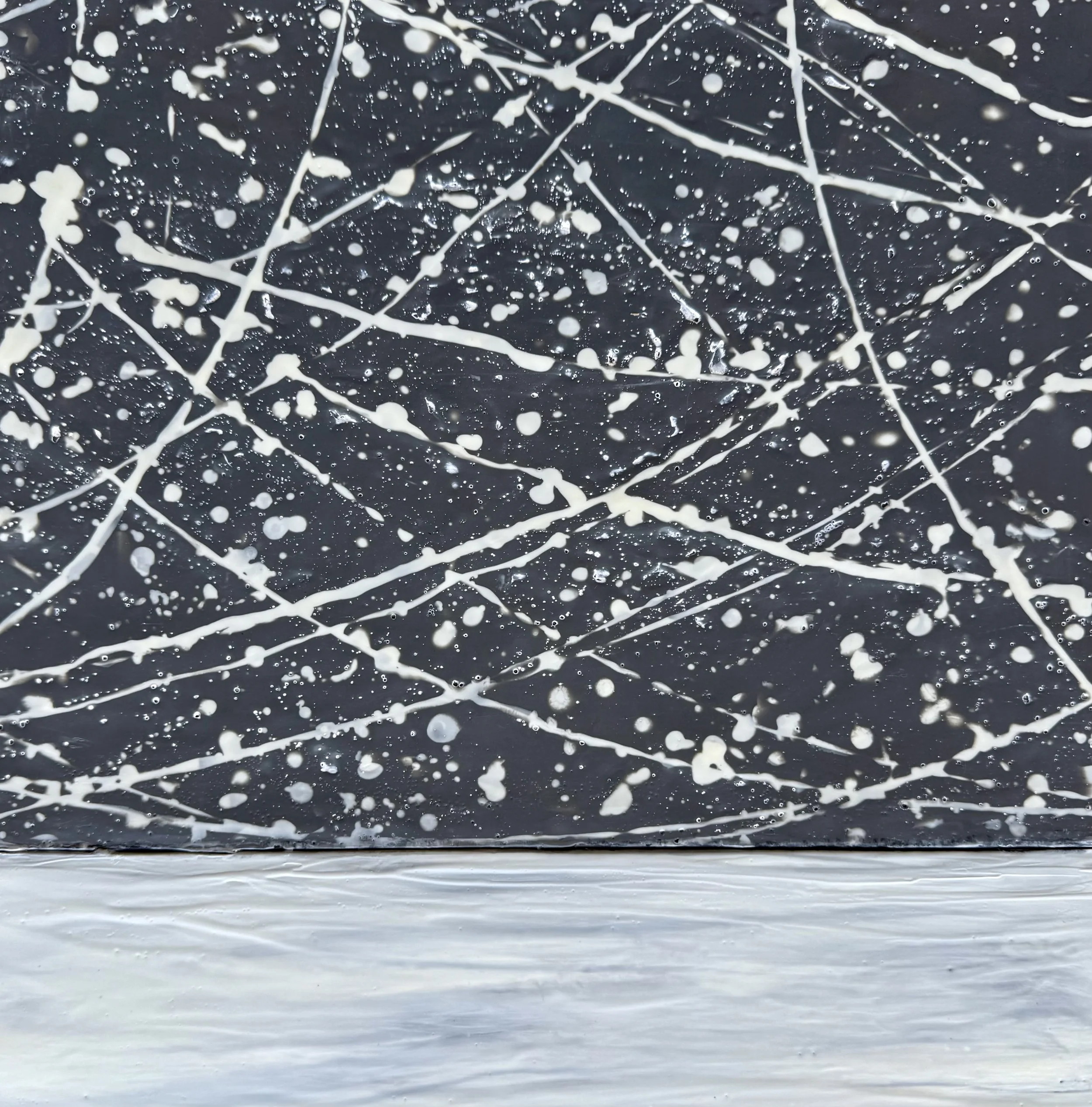
What is Encaustic Art?
Encaustic is a wax-based painting medium composed of natural beeswax, damar resin (a crystallized tree sap), and pigments for color. The word "encaustic" comes from the Greek word enkaustikos, which means "to burn in".
The process involves melting the wax medium and applying it in molten form to a rigid, porous surface, such as a wood panel. Each layer of wax is then "fused"—reheated with a torch or heat gun—to bond it to the layer beneath it. This results in a durable, luminous surface with incredible depth that can be carved, scraped, or layered with mixed media.
Frequently Asked Questions
1. Is encaustic a new technique?
No, it is one of the world's oldest art forms, dating back over 2,000 years. It was used by ancient Greeks to weatherproof ships and by Egyptians for the famous Fayum funeral portraits, many of which remain remarkably vibrant today because wax is a natural preservative.
2. Will my painting melt on a hot day?
Under normal household conditions, no. Encaustic paint has a high melting point, typically between 150°F and 200°F (65°C–93°C). However, you should never leave an encaustic painting in a car on a warm day, as temperatures inside a vehicle can quickly exceed 160°F and cause the wax to soften or melt.
3. How do I care for my encaustic painting?
Avoid Direct Sunlight: Like all fine art, keep it away from direct, intense sunlight to prevent fading or softening.
Temperature Stability: Hang your art in a temperature-controlled environment. Avoid extreme heat or freezing cold, which can cause the wax to become brittle or crack.
Buffing for Shine: Over time, encaustic can develop a slight "bloom" (a hazy white residue) as the wax cures. Simply buff the surface gently with a soft, lint-free cotton cloth or even a silk stocking to restore its original high-gloss sheen. After 6 months the wax is fully cured and buffing is no longer necessary.
4. Does encaustic art need to be framed under glass?
No. One of the most beautiful aspects of encaustic is its tactile, luminous surface, which does not require the protection of glass. In fact, sealing it behind glass can trap heat and is generally avoided. Many collectors prefer "floater frames" to protect the edges of the wood panel.